The Secret Thoughts of Successful Women by Valerie Young - Review
Imposter Syndrome isn´t just in your head!
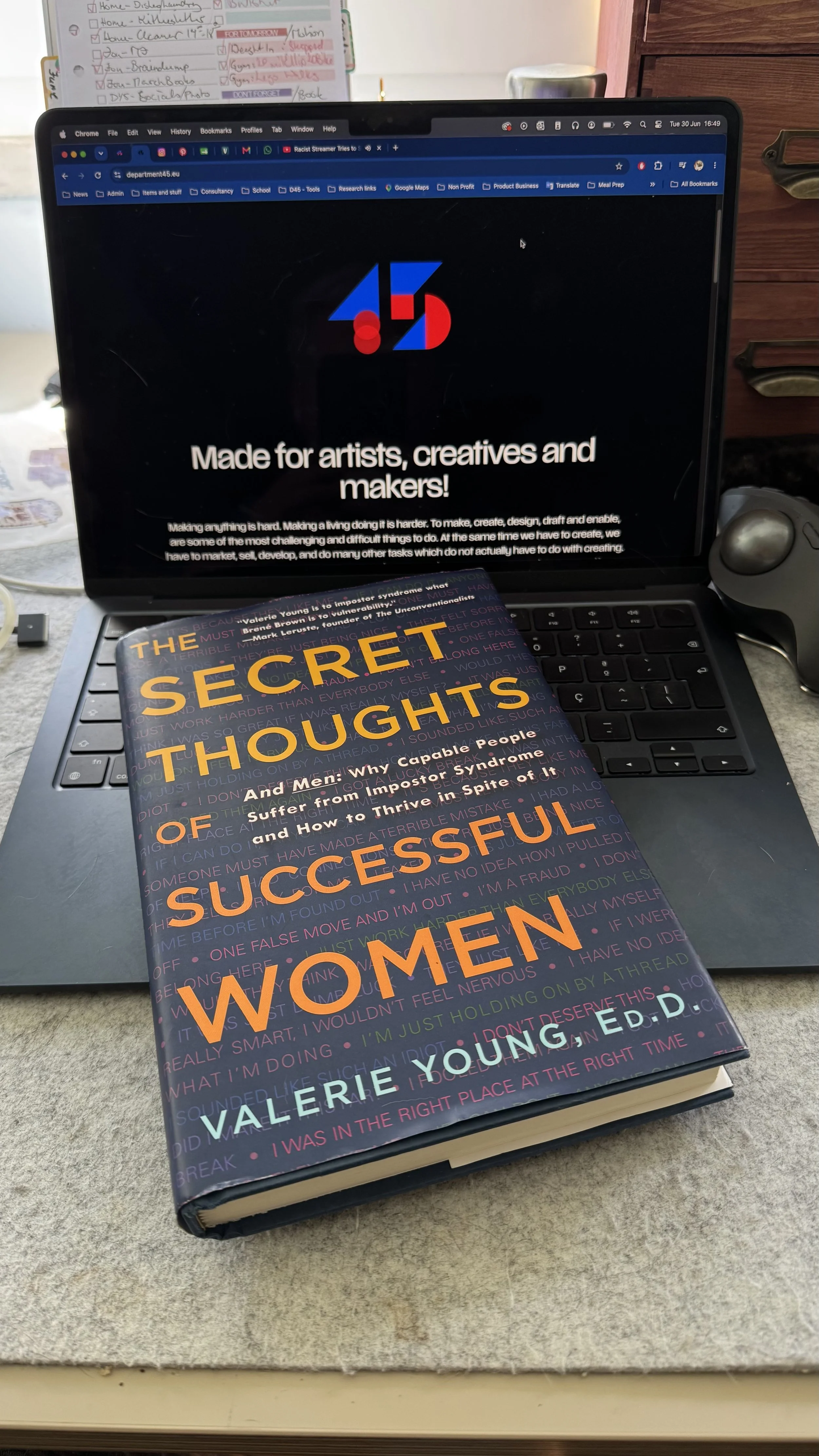
With the consistent feedback from our in-person sessions, regarding the common sense of imposter syndrome. I wanted to continue to read more about the subject. We´ve already explored in the Imposter Cure by Jessamy Hibbard, read our review here (INSERT LINK), that book focused a lot on working on the inner imposter. Structuring a narrative that set up to tell you about how to identify and label the imposter, while at the same time building up the tools to discuss and understand the feelings that make up the self-doubt and insecurity. The second book in our series on entrepreneurial psychology is The Secret Thoughts of Successful Women by Valerie Young, (ISBN: 978-0-30745-271-9). This work along with The imposter Cure are often cited as two core works dealing with Imposter Syndrome.
Nurture vs. Nature?
Let’s look at the content and format, of The Secret Thoughts of Successful Women. This work also has a clear approach on Imposter Syndrome, by both establishing a definition and outlining the commonality of the experience of self-doubt and insecurity that manifest as imposter syndrome. There are some interesting differences in this book then the previous read book the Imposter Cure. While the Imposter Cure, is clearly focused on the individual reader and their manifestation of imposter syndrome, the Secret Thoughts… has this angle while also clearly outlining in some depth, that not all imposter syndrome is in your own head, and another set of reasons why this is more commonly noted in women.
The book goes to some length, quite convincingly I might add, outline why women have a predisposition to imposter syndrome as a factor of the very environment that they are working in. The fact that women have been entering many new environments, in the wake of the second world war, including academia, and the workplace, these environments, were and remain male dominated. Many of the features, structures, cultures, and success metrics were set up by for, and measured by men, for men. The arrival of women in these environments, the author, states create and created an environment where feelings of inadequacy, discomfort, insecurity, and doubt would be not only expected but reinforced. As a part of the very moving in on the turf set by a very different gender structure creates many of the existing and ongoing conditions to create the feelings that manifest as imposter syndrome.
I feel this is a key point of the book which offers many of the same arguments remedies and structures to deal with imposter syndrome that the Imposter Cure provided. The environmental explanation that makes the feelings you very really may have not just a factor of being in your head, but something projected by the very environment that we exist in and within is a huge element of both understanding Imposter syndrome as well as understanding it´s origin. With the many people we´ve spoken with a common questions and statement is wondering where it comes from or started with. Why do we feel like this and clearly it is both personal and environmental when considered in the framework of both a male dominated and dictated world that was and continues to open and change. This element of the book was a critical take away for me because we cannot deny that much of the work to overcome imposter syndrome lies with the individual, to overcome self-doubt and insecurity understanding the environmental elements allow for effort to support to come from the people and organizations around the individual as well seeks to give some relief from believing that this is just a “you thing”.
About the gender element, the books´ title about Successful women “and men” in small text on the front is a on purpose provocation that the author sought to ensure that while studies show that all genders, and professions show signs of imposter syndrome, the reason why it is more prevalently seen in women in these studies comes from in the Authors opinion a bias environment and a legacy of male dominated contextual framework that sets the conditions for how both genders approach and are expected to approach work.
I greatly appreciated the eye-opening part of this book for the environmental perspective and participation in Imposter Syndrome, to give us more perspective and tools in which to both deal with and prevent in some cases the continued development.
Summary
I want to start by saying this is a great book. With great insights, well argumenta and insightful considerations of new ways of looking at imposter syndrome. Having read the Imposter Cure, I find this book greatly complements the book by setting up a manner of environmental causality in this book and the inner perspective in the Imposter Cure. Both books should form a two-book syllabus for those that want to expand their knowledge and are seeking real solutions for the challenges of imposter Syndrome.
This is a great read and a definite recommend for those suffering from Imposter Syndrome or wishing to know more about it.
If you´re struggling with confidence or finding no joy in success, then why not look out for one of our face-to-face sessions in Lisbon, follow us on Instagram to see the next dates. We host sessions for professionals of all types in Ajuda monthly covering topics, far and wide for creatives and craftspeople.
Additionally, if we can help you create your next business step or which to understand if your pricing is aligned with your goals then don´t hesitate to reach out to us on our email or Instagram for a free first consultation.
Thank you for your time.
Tim H.
Lead consultant.