The War of Art, by Steven Pressfield - Review
The Resistance, the Pro, and the Beyond
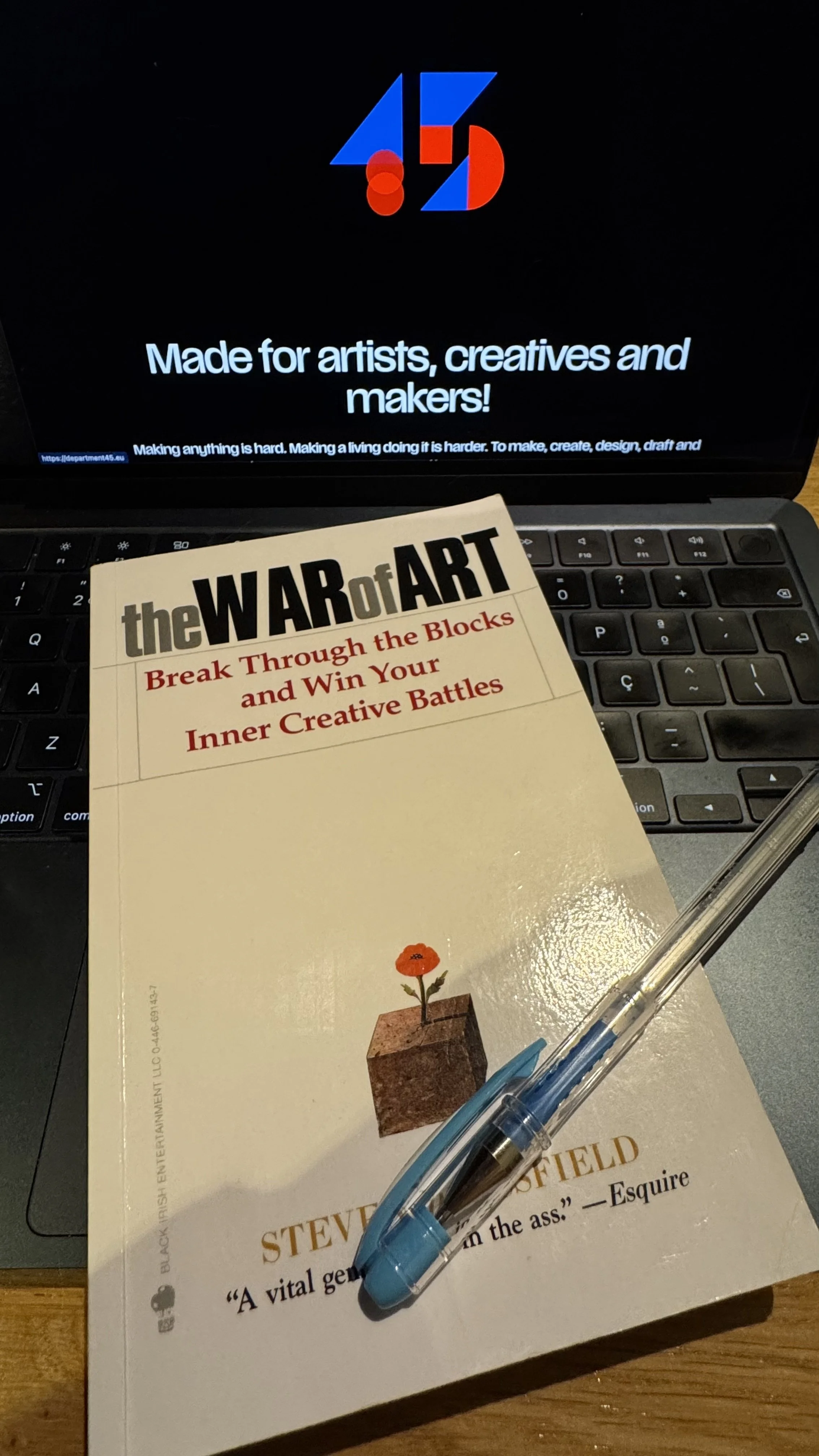
Running a business for most people is a solitary endeavor, either we’re a solo enterprise where we fill all the steps and roles of a business, as the key resource, or we’re the boss and owner with some staff that can’t relate to our journey as it’s their job and our everything. This means that we often will find ourselves to be our only counsel and will only hear our own voice for those moments of doubt about the business, and its next steps. We at Department45 want to explore that in our next series of book and podcast reviews where we will be exploring the psychology of the entrepreneur in more detail, to review the resources out there available as well as to understand what key struggles, we go through as solo enterprises and small businesses.
The first book in our book review series, starts with The War of Art, (ISBN: 978-1-93689-102-3) by Steven Pressfield. Steven Pressfield is a writer of novels and screenplays, that spent a long time working in Hollywood working for his big break. He has had success in both areas, but only after a lot of blood sweat and tears. He speaks of that journey and his experiences in this book. The book was written in 2002 and with many of the books we review we always have to take a moment to address the timeline, as many of the older books we´ve found their age, affects their message or the content in a way making the book less relevant or accessible This isn´t the case here in my opinion since the core of the book is a discussion of the authors process and experiences regarding creative creation and this doesn´t have a time or context specific reality. The discussion in this book is about creativity and the mental state around it which we feel is still extremely relevant today, and potentially even more so in the development of AI all-encompassing growth.
This book is about pushing yourself, to create and get through the barriers that we put in front of ourselves, that limit us from doing the THING. Whatever that thing is, the book works to help using the authors experience as a struggling writer.
One’s enemy is the best teacher – The Dalai Lama
The author starts his book by labeling and naming his enemy, the resistance. The books format is of small single page, texts, about some thought or feature relevant to the theme of the chapters, in the case of the first part of the book many are “character features and behaviors” of the resistance. Things that personify and manifest or discussion into this creature or force that our author creates as a personification of that limiting factor that stops us from creating, building, or taking that leap we’re not doing. Chapters cover topics like characteristics, like it being impersonal and invisible, which means the force that is stopping you it doesn´t care who you are it doesn’t know you and isn´t invested in your success, it´s also not seen or obvious it’s felt. Other chapters, talk about how the resistance uses rationalization to justify us not getting the work done. The resistance is the core theme of the first half of the book by giving it form, and attributes that in some cases resonated with me as a creative and solo enterprise. Some of the chapters were a bit abstract and I didn´t agree with but all were interesting in their positioning. The authors, statement that Support is part of the resistance as support groups, workshops and similar can give us excuses from doing the work isn´t my experience, I felt the scoping of the resistance is an interesting take.
Labelling the Resistance as a coherent force. Our own excuses and reasons for not doing the Thing, will be both common and individual meaning that they won´t all apply or be discussed in the book that are impact yourself, however seeing them as a part of the same problem to overcome I do think is helpful. I appreciate knowing my enemy as the quote above speaks too. We can learn from good examples and as much or more from bad ones, so taking the resistance as a manifest form to learn from, build upon or defeat I feel is an interesting approach.
The second part of the book speaks to ways of dealing with the newly defined named and conjured enemy. The becoming a Pro as the author calls it, he defines the characteristic of a professional, in his words. As before where he manifests the Resistance by giving it form, opinions, and life, he builds up the professional that combats, the resistance in actions, opinions, and life. The authors, pro is a person that does. They sit down and write, create, and build, consistently and repeatedly. They create and craft, with an awareness of the resistance but with no time for it and no regard. The authors opinion here comes across very much the mentality of push through. Eyes open and aware, but push. Tenacity and perseverance are the reoccurring hallmarks of the authors professional. Their work is craft not art, feedback is not personal, its learning. Failure is expected and part of the process, get up dust yourself off and keep going. One of his chapters, is “How to be miserable” where he speaks to his experience as a Marine, a solider and how that taught him to be pushed to the limit and that he could forge through that and come out the other side.
This part about the Pro, I can appreciate as a part of this book’s narrative, we´ve built our enemy tall and clearly in the resistance, now we will build our hero, the dogged professional who is dispassionate and indifferent to the state of his enemy he does the work and through hardship pain and personal loss succeeds or doesn´t but is always there. I get the message, and I agree with it largely, I also know that most professionals understand this as part of their process. The classification of the pro is another strong chapter that I think helps frame attitudes in dealing with the authors created resistance and narratively these chapters compliment each other well.
The last chapter of this book is where I struggled a bit. I enjoyed the manifestation of the resistance, as well the buildup of our stoic hero the professional. The last bit here we now go into the more intangible space, where the author looks to talk about inspiration, and tenacity as well as his more introspective spaces and experiences. He first talks about how we always must do the work, without sitting down and working we got nothing so stop talking do the thing. Nothing else matters. This resonates with me, the key resistance characteristic mentioned early in the book is procrastination which for me is one of my resistance monsters best used tools. As I can goof off entirely too much and doing the work any work is a defeat of the resistance. Now the rest of this chapter was more esoteric and abstract and many of the topics of angles and fear and self, are quite personal and in that I appreciated the chapter for the discussion, but it didn’t resonate as much with me as the other parts. I understand this however to be more a me thing, then anything about the book or content.
Summary
The book itself is a quick read, written well thoughtful and on topic with little additional bloat or flowering language, written by someone who clearly has spent a lot of time thinking and living the message he shares. I learned a lot from it and can highly recommend it. I enjoy a good story and I think with the way the book conveys it´s bad guy and stoic hero, we find a relatable way to discuss creative block and self-limiting behaviors.
If you´re finding yourself struggling through your next major decision or in need of help manifesting your next project, then please reach out to us we would love to help you defeat your resistance. Reach out on email at timh@department45.eu or on DM at our Instagram for a free first consultation.
Thank you for your time,
Tim H.
Lead Consultant - Department45.eu