Profit First - Review
Profit First
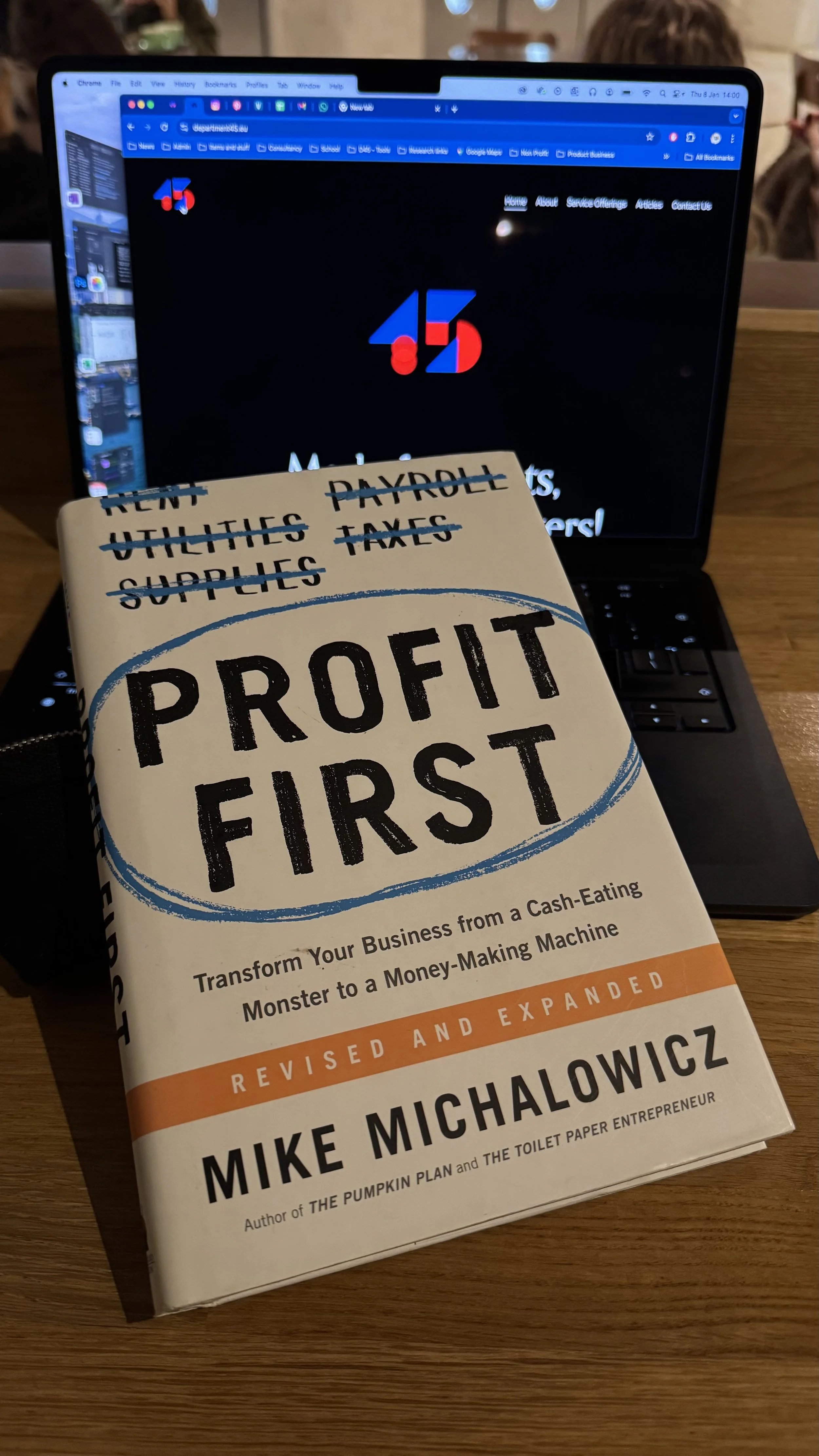
We continue our small business book review series this week with, Profit First by Michael Michalowicz. This book is a commonly result if you search small business books and was a personal recommendation by a dear friend of ours Diana at A La Pata. A light book of only 200 pages it’s a light and simple read with a single core message that the title alludes too.
The system that the author proposes and advocates for is the full core of the book. For current small business owners, and future entrepreneurs alike the content is equally applicable. The author comes from an entrepreneurial background with numerous businesses created and sold, along with his own self-confessed poor financial decisions that doomed other ventures he has had. These experiences have let him to develop the core of this book as well as some of the thoughts he’s illustrated in several other books has written that we’ve not read or reviewed. This goes to say that we believe the author has credible experience and the knowledge spoken of in the book seem lesson learned.
Now let’s focus on what what’s at the heart of this book and what message our author is putting forward.
Are you making a profit? What is profit?
Why do most businesses fail in the first five years. This statistic is a common understood fact and a well-established truth. Most companies that are created will not make it to their fifth birthday and of those that do even less will make ten years. The premise of many of these failures relates to their general management of course, as well as a range of factors, but core to the authors message is, the authors experience with businesses he’s created across several different business areas as well as business climates is profit. His own companies and those of others he spoken too is that most entrepreneurs are not seeing a profit, or financial benefit from the companies they are running. Many businesses are either not profitable due to high expenses, or constant reinvestment into the business, many owners, and stakeholders, see no additional benefit from the company operations, aside from possible salary payments (referred to in the book as owners Compensation – Owner Comp). The fact that most business are not generating a tangible profit or that the owner is running the organization on a starvation level where all funds go to the delivery of operations, is in the authors opinion one key factor to the death of companies.
Now we want to take a moment and clarify what the word “Profit” is defined as within the content of this book as we may have different opinions and the author also spends time to clarify what he means with the word. It’s the author opinion that profit, defined as a payout from the company to the owner, and stakeholders, should always be part of the business. Effectively in the model I’ll speak to shortly, allocating funds to pay out a profit, is the first allocation of any resources. When you get a payment for services, a portion is first allocated to profit before any other source of expense. Profit, in this context, is not just what is left of Revenue – Expenses = Profit. The authors’ profit is a consistent piece of every incoming revenue.
Now that reality is a key factor in this books message, as it shakes the bag a bit on the premise of profitability and when you realize a profit. Traditionally a profit comes after you get paid, and you pay your expenses, where now we’re asked to take a piece off the top of all action to ensure that profit is always there. Before we pay the bills, we take out the profit. It’s a mentality change that frankly I find interesting. I think there is a lot of merit in this model when it comes to the shift in mentality.
The Model
The Profit First Model as I’ll call it is at its heart about a shift in priorities, and that manifests in a core shift in the banking and financial handling that most companies will be doing. The mentality shift is about ensuring that a share of the revenue is allocated directly to be a payout to stakeholders and owners. It’s a conscious decision that the business should serve the owner as a financial asset, and having that clear goal, the model is set up to build around that decision.
With a focus on how the incoming revenue is handled in the company the model itself, outlined in the book in a degree of detail tells the business owner how to navigate the way to ensure a percentage of all incoming revenue becomes a profit account.
I won’t breakdown the model in detail, that’s the value of the book to do but suffice to say this is about moving the incoming revenue through a series of dedicated bank accounts ensuring that target percentages are allocated and then ensuring that the money in each account is allocated to their target purpose.
Now what the model firstly identifies that if you currently have no profit in your company then you won’t find it with this model. You’ll simply see that all incoming revenue is tied up in expenses or similar outgoings. The purpose of the model here is manifest the decision we spoke of above, which is that you want to have a profit? Then you need to make room in your business to have that profit, and that decision means you need to make this profit come from other parts of the business.
A relevant portion of the books content is discussing the impact of this mentality shift and the real operational impacts it will have on businesses. This means that for you to have a profit, you’ll most likely need to take it from your expenses, and to take it from your expenses you’ll need to reduce those expenses.
This is how the model and the decision connect as the model facilitates the decision to take an active profit from the business. This becomes realized in that you’ll need to adjust the business operations to allow for this allocation, or reallocation of funds from other parts of the daily business. At great length the book speaks of being frugal and reducing expenses.
Here is where I have some criticism of the book as the handling of the reduction of expenses, is done both very easily as well as to a degree flippant, meaning that the need to reduce expenses and the ability to do so are discussed as being easy and simple and quickly where for many small businesses that I’m aware of that’s not often so easily done and impacts from significant expense reductions are usually large and difficult to make.
Message and Format
We’re making a conscious decision to take a profit from our business and the book has a model which in my own opinion is pretty good way of outlining both a way to do that and a reasonable method on how to do that. The book does a good job of outlining the message and the model in a moderate package.
I have some issues with the way the book was written. This I recognize is entirely personal to me, I find the authors constant attempts at humor, date the book immensely and make it an annoying read. The constant jokes and hokey side comments is like reading a teenager’s idea of what a book should read like. This is just my opinion and experience reading it, I appreciate that this will probably resonate with more people than it annoys so I don’t discourage anyone from reading the book because of this I simple seek to prepare those readers who like me find the humor drole and dated.
Summary and Relevance
The message and model that our author outlines, in this book I really appreciate. The fact that it begins by having Profit, be a conscious decision is interesting and provocative. As it makes the priorities and goals of the company clearer. We need a profit from this company beyond our salary. The book then provides a model, which is simple, and scalable, to help you implement the change in business strategy to now get you a profit on all incoming revenue.
In this I like the book, and I recommend it for all entrepreneurs, that are beginning at their journey or in the middle, if you feel that you’re not seeing a benefit of your work then maybe the message and model in Profit First can help you reevaluate priorities and build a profit business.
If you’re finding your finances are struggling or you’re not sure how to build up that new Idea you have, why not reach out to us and let us help you. We can discuss your pricing and finances or help build your next big project. We’re available at timh@department45.eu or reach out on our DM’s on Instagram.
Thank you for your time.
Tim H.
Lead Consultant.