Choosing your Market.
Markets as an investments
As we continue our discussions and reviews of the many types and market options as a retail opportunity for your crafts and goods. It’s important to do your research into the different details about the markets you may be invited too or seek to get into. Most markets will be paid by you as a vendor, in both cash to the organizer and your time and product investments. As a business owner this is an investment and one that can be difficult to make. With investments come risk, will the market have the right type of clients for you, what resources will you have available, and many other questions exist to think about when making the decision to go to a given market or pursue.
To that end we have created a handy check list of things to discuss with your market vendor and either review yourself by attending one of the markets or looking for the vendor to help you understand. This is about educating yourself to ensure that your investment in time and resources are well invested.
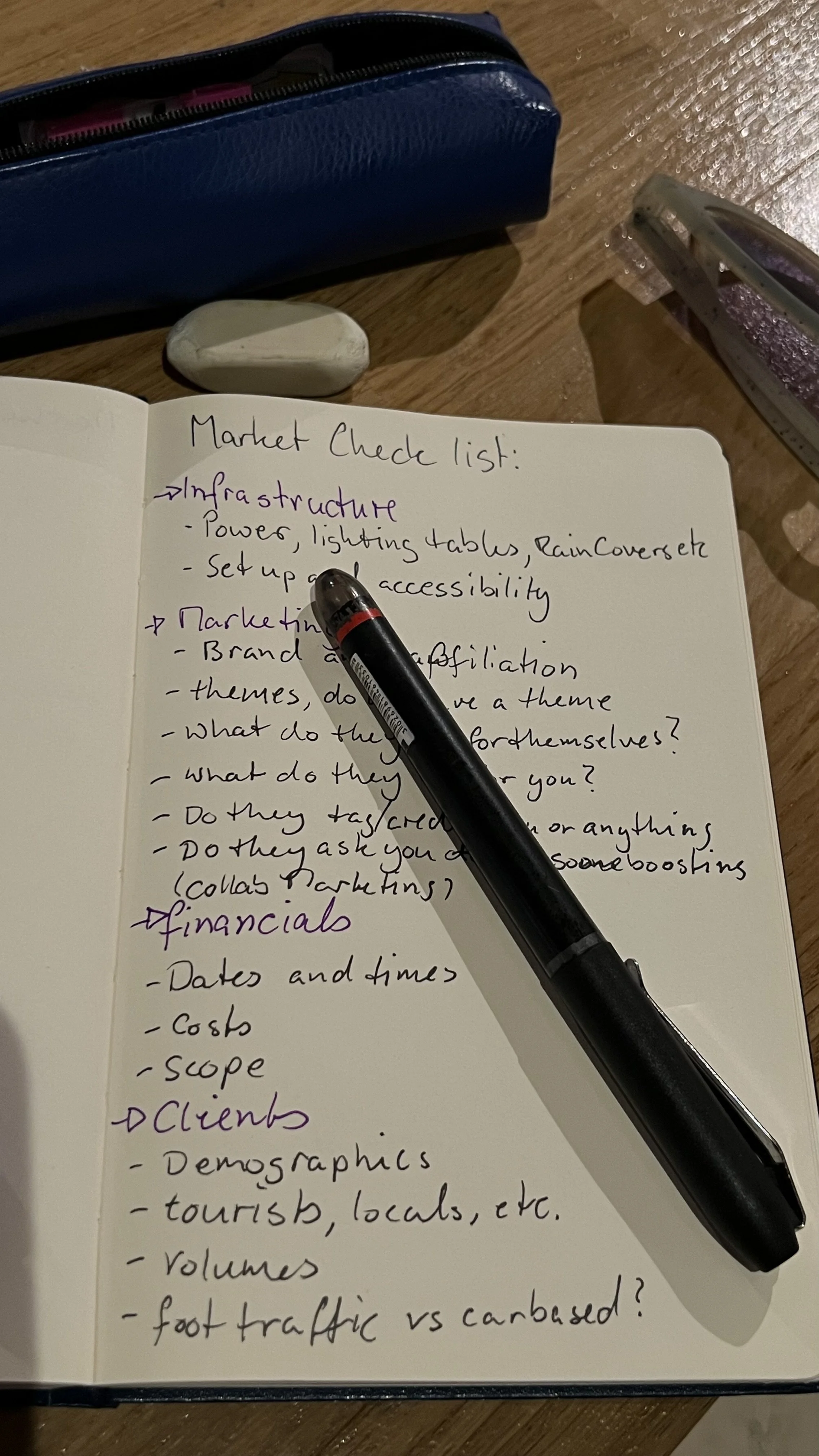
Market Check list
To start investigating our investment and choosing the right market we’ve worked to create a checklist of topics, details and information that should help you as a vendor understand if this is a market for you. Some of this information will be easily available from the organizer of the market at request or via their information details. Other details will depend heavily on what your product is, what manner of resources your product needs and other logistical considerations regarding the market.
While the list is large and covers a lot of ground, you’ll have to consider which pieces of information are more critical for your business, and what is less so. Additionally understanding the impact of what information is available is something you should consider when deciding.
Consider the simple fact if the vendor provides tables, or not, do you need electricity or not. These factors can quickly change the cost of a market (Providing and/or transporting tables) or attending if you need electricity and it’s not available. Consider the list here as generic until refined for your business. And if we’re missing any then please add them in the comments below.
Market check list
· Infrastructure
o Power, lighting tables rain cover etc.
o Set up and accessibility.
· Marketing - How will they use or boost your awareness.
o Brand and Affiliation.
o Themes do we have a theme for the sale.
o What do they do for themselves?
o What do they do for you?
o Do they tag/credit you or anything?
o Do they ask you to do some boosting (Collab Marketing)
· Financials
o Dates and times
o Costs
o Scope
· Clients
o Demographics (Age, gender, etc.)
o Tourists, locals, etc.
o Volumes
o Foot traffic or car based.
· Vendors
o Who else will be there.
o Will they be selling Similar products? - Competing products?
o How many vendors/Stalls
· Insurance and coverage
o Do they provide any health, or liability coverage?
· Logistics
o Parking available for loading and unloading.
o Parking for customers
o Public transportation
o Inclusivity – does the venue have access persons with a disability.
· After market
o Any boosting or after market information they collect or provide?
Infrastructure
The infrastructure the market makes available can be critically important and knowing what you need and what they provide can be a big deal in understanding if this market is right for you. So first ask yourself, what do I need? Do you need tables? Electricity, shelter from rain, is the market outside, do we need to consider a changing room, Wi-Fi or internet connection for points of sale (check our articles on how to get paid if this is a concern for you)
Now go and look or ask what the market provides, do they have the details you need, will you have space for your preferred market set up. If they don’t provide tables, will you be able to get in with your own tables.
Likewise, it’s important to consider how set up will happen, many markets are in locations or halls with specific access, so what time will the market provide for you to set up your stall and setup.
Ask these questions of the vendor as this should be readily available in any collaterals they provide. And consider if key items you need are not available what the cost of providing these will be for you in time and costs.
Marketing
Marketing of the market, pun intended, is one of the most important values the organizers should be providing you with. The fact that they are just as interested in having many customers come to the market as you are means that they should be very engaged when you ask questions about this. I feel that your market vendor should be very upfront, clear, and eager to discuss the idea of marketing the market as getting as many people into the same place as the market will mean more opportunity to get the right customer across your products.
We therefore should be understanding what their marketing reach is, where do they advertise (social media, traditional media, online, pamphlets or posters etc.) We should understand their follow counts and their reach. They should be showing this in their information. They need to be good at this, in my opinion and if they are not then it’s a concern. Research their social media and check out previous examples of marketing they have done. And if you can’t, find it, that’s a concern.
It’s also important to understand how you will be working with them on marketing the market when you decide to go, Will they want mentions of the market on your social media, will they boost your attendance to their social medias. Will they ensure to credit and tag you in any relevant photos and media. This is minimum courtesy, but it does happen that markets fail to understand the power and necessity of marketing their market.
Pay attention to the work the market organizers do on their own behalf and understand if there are any expectations from you as a vendor should you sign up. This should be one of the strongest benefits that a market can provide you with and one they are most eager to show off and share.
Finally give some thought to what and who this market is for and if the market has a brand. We say this as there can be a need to ensure that your own values align with that of the markets. In a politized world we decide with who we stand with. Make sure you’re comfortable with your brand being aligned to the brand of the market and the vendors they normally include.
Do your research on social media for this and go with your gut.
Financials
This topic is straight forward and included for completeness. We need to understand what the dates, costs are going to be for this market. How much is it per day, what dates are we going to be there for. Do we as a vendor have to be there for the whole time, do they have additional costs, how do we pay the fees, how do we get tax receipts. Keep a clear focus on the costs and watch for upselling or where the fees are not transparent. There should be no doubt what you’re paying and that you can get a receipt that you put into your accounting as a business expense. Any shenanigans on clear details in this space, is a warning sign.
Clients
With this category of information, we’re looking to understand if the people who usually visit the market are the same as those that normally are interested in your product. One of the most difficult and basic facts of business is getting your product to those people who want/need it. Ensuring that the market you’re looking at has the right general clients visiting is going to be a big part of your decision making.
You know your product, and you know who normally is buying, it, use that to check if the market can provide that clientele. If you are selling products to pregnant people, then a market for niche punk and alternative clients, may not be a good fit. If same alternative and young clients are your usual customers, you won’t find them in a market that caters to boomers and retirees.
The best markets will know who they have coming to their market and will know who will be successful, and remember the market wants you to be successful. At least they should. Speak to the market and make sure you’re going to see the right customers.
This analysis can be done by getting data on who is coming to the market, what kind of customers are they (tourists, locals). If the market doesn’t provide any data, then you can visit the market if that is an opportunity, going there and see who is there and do they match your customers.
Getting this right is very important and something the market organizer should be willing to help with.
Vendors
Competition and collaboration are another topic to consider with a market. Who else will be there, and what are they selling. Does it compete with your product or complement it? This should be another item you’re getting from the market organizer in at least general terms if not specific names of vendors. It should be easy for you to understand if you’re going in as part of a flock of handmade ceramics, or if you’re the only handmade item at a garage sale. The theme of the market and the products you and other vendors will hopefully complement each other in ways that amplifies each vendor without directly competition. Likewise, it can be good to understand the size of the market and scope of how many vendors there will be there. Make sure that the number of vendors and the general products they sell make sense with yours, and they complement and don’t directly compete.
Insurance and Coverage
A simple but nice to know area is about coverage and insurance of the venue, and market provides. Does the market organizer have insurance for this market, what do they provide of coverage, how does this align to yourself as vendor, and coverage for the clients/customers. Do they provide any theft or product loss coverage, if the products are left overnight for a multiday venue is the product covered?
Does the market organizer provide refunds for their cancellations and under what terms do they return fees and charges? Will they cancel in the event of rain or similar?
These questions can be relevant however knowing if your business insurance or the market organizers is expected to cover any issues will be a good thing to know. Another question for the organizer to provide details on.
Logistics
Another category of questions related to the physical conditions of the market venue. Do we have parking, parking for you as a vendor to load and unload products, stalls and goods, parking for clients/customers. Is the parking free or paid for?
Do we have public transportation and where is it? Is the venue accessible to those people with disabilities?
Where is the venue, is it in a good location in your community or far outside the normal area? Do you have to travel to get to the market, from out of town? Are there anything nearby the venue that can support the attendance or distract from it? Is the market being held in a public park with a lot of normal people walking through it or is the venue a warehouse on the outside of town, with limited foot traffic? Is the market being held on a date or time where no one will be in town, or at the same time as another major event that might distract potential customers. Give some consideration to what around the market might impact the market attendance.
We want to ensure that we have a good location that ensures strong attendance without there being too many distractions.
After Market
Finally, we have the last consideration that isn’t common but worth mentioning is understanding if we have any follow up actions or details that the market might need or want. Does the market offer any after-market information to mention how many people attended or details on how the market measures its own success. If they provide something like this, we will think that shows a level of seriousness and professionalism that worth considering as this may help a vendor evaluate the investment after the fact.
Decisions and Analysis
Our checklist is meant to start your thoughts, and while it is large and comprehensive, this is meant to stop you deciding. Look at the list and find out the most important topics for your product and business, and once you have those topics go ask the organizer for your information. Much of this is hopefully available by good and strong organizers, and some you may have to pull out of other groups. Make sure you have the information you need to decide if the market is for you. As this is an investment. If an organizer can’t provide some information, see if you can find it through their social media, or if possible, visit a live instance of the market or seek out prior vendors for reviews and feedback.
The purpose of the article is for you to see this as an investment, and to provide you with the tools to evaluate that investment.
Thank you for your thoughts and attention, if you think we’ve missed any topics to add to the check list or if you have any perspective on our analysis that we can expand to the community please use the comments below, or hit us up on DM’s on our Instagram, or by email at timh@department45.eu
THANK YOU!
TIM HENRIKSEN
Lead Consultant