The Artist Way by Julia Cameron - Review
Help to self Help,
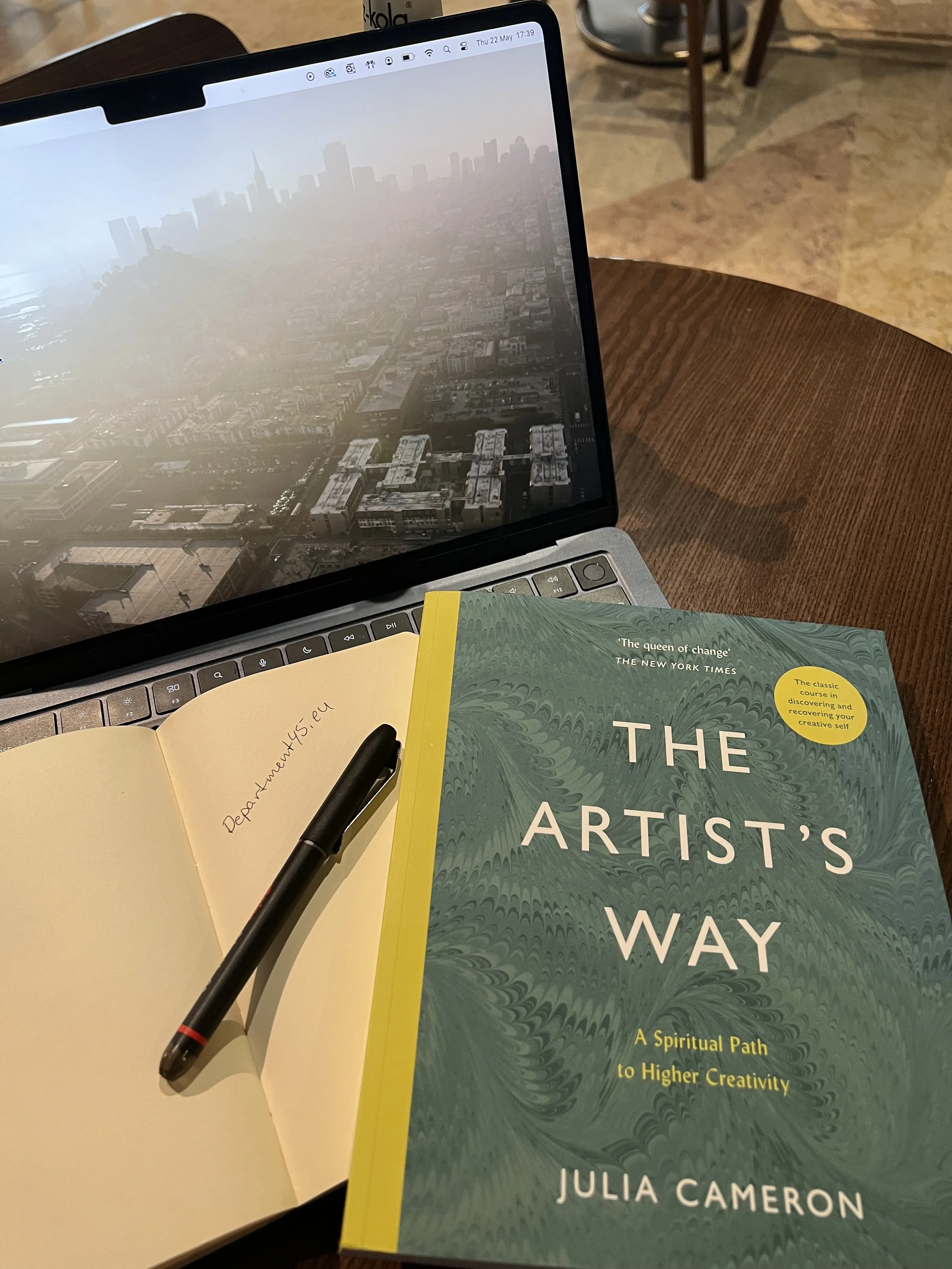
As part of our ongoing series of reviewing five of the most recommended books for art business, We’ve now gotten to the elephant in the room for size success and notoriety. Julia Cameron’s 1993 written The Artist Way. Julia is an extremely established writer, journalist, novelist, film director and many other titles across a massive body of work and is extremely successful in several of these fields. This book represents a starting point to an entire environment built on the starting point of this one book. More than just a book that tells you how or what to do this is a more a workshop course, borderline self-help book.
The books content and format here is already very different than any others we’ve reviewed so far. Where most of those books had specific ideas, scams, or direct actions to tell you how to advance or create your business. The Artist way is more of a guide and workshop. The book is formatted more textbook with most of the book given over to a 12 chapter – week course load which consists of essays, some tasks, and check in’s that help to guide the reader through the weeks theme and messages. The development of this course work is more in the line of a transition and development of character then a telling of specific details and things to consider. The expectation is that the reader invests an hour to an hour and a half a day over a twelve-week path to align and complete the course, as well as to bed in the changes, methods, and ideas that the book conveys in its essays and tasks.
The format is not unwelcome given the scope of the book is specifically on change and development of the creative artist that the author believes we all have and can embrace with the tools that she discusses and outlines.
It’s worthwhile however to note right away that this is more development and knowledge development book then anything that will give you answers or simple methods to get that business developed. The book is focused on unlocking the creative in you vs. getting you more sales on etsy.
Program, Essays, Plans, tasks, and god?
The book/course text as mentioned above contains a course load that seeks to unlock the creative bound within all people and gives a baseline to how to do that acknowledging that the development, transition and unleashing of a creative outlet for most people is a time consuming and ongoing process. The fact that this is a course, a program that takes time and investment to develop I think frankly is great. I believe many times that change takes time effort and consistency, and that being reflected in the book and its format I believe gives it more validity and more realistic chance of succeeding.
Program
The program and the key tasks within the book itself also I think are good. The book outlines two starting activities that all readers, or participants are meant to begin, which are morning pages, and Artist Dates. The Morning pages are each day to write three pages of anything and everything and nothing each day, at its start. Simply put anything to paper you want or think off. They have no purpose and all the purpose, as they represent a mindset shift and an outlet. The morning pages are for the participants eyes only and shouldn’t be shared or evaluated or arguably even re read. They represent the brain dump.
Artist Dates are a specific time that the participant does something to stimulate the inner artist, by any possible means they can think of, Go to a movie or park, draw a thing, or hear a music, or anything you can think that might be good for your inner artist. These two tasks form a baseline for the program, that the participant will go back to weekly, and use the contents of in various ways over the course of the program.
It’s a very interesting set of tasks that I personally tired and found to be effective. The morning pages give a great way to bring all the random thoughts in a form of focus and meditation, it’s not about content or the value of what you write it’s the writing taking a format that matters. The artist dates, as well represent a means to indulge and invest in your artistic and inner creative mindset for no other purpose then investing in it. The creativity needs feeding, regardless of what it is fed with.
Essays
Beyond the two tasks above you are then presented with a weekly chapter, that contains an overall theme, outlined in usually a handful of essays on a range of topics, a range of weekly tasks and a check in stage. All these lend themselves to discuss and speak to common ideas and concerns regarding areas such as your inner saboteur, dealing with other people in your creative process, shame, anger, and perfectionism.
These many essays are for me the real gold of the book as many are very insightful and have a great way of quickly breaking down the core idea.
One notable theme was the discussion of the virtue cycle, where we often find a sense of pride and purpose in denying ourselves some material or similar desire. That the denying of it has value to us as martyrs by not indulging or doing it, for reasons that may not really make sense.
These essays are in most cases excellent, and quickly break down some of the core tropes aligned to artists both by themselves and external forces. I really grew to enjoy them, and they alone provide a lot of value for the reader as the author does a great job of discussing most of these relevant topics.
Tasks
The tasks in each chapter as well I found to be very clever and both leaned into the subject of the weekly chapter, but also made good reference to pervious weeks and tasks to develop some thoughts further from one week to another. I found that most were very valuable as they often ask the participant/reader to write down different things or complete a sentence prompt. Such as in one quiz in the book (pg. 101) “The Biggest lack in my life is _______? The greatest job in my life is_____” etc. These prompts are great thought starters and the participant that embraces the coursework and follows the program I believe will have a proper developmental change and growth with the tools and tasks presented, here.
God?
Let me just be clear I like the books, the program it presents and the daily tasks that it encourages participants of the program to do. I see value here. However, I have to say that the book comes with a very unexpected passenger that I personally find very unfortunate, God, or the great creator as it’s often called. Many chapters, and essays speak of God, as the source of creativity, and finding your inspiration from the great creator and similar such wording. While often it’s mentioned as spirituality, the leaning into a single creator as the one above is almost impossible to get away from.
In the books very introduction, the author has seen the need to explain away that god in a Judeo-Christian fashion may not apply then just substitute it for whatever you want, goddess, mind universe source, or higher power (pg. xviii) The issue however is that the author doesn’t change the word in the book. She uses God constantly and tell the reader that if you can’t see beyond the word then it’s your blockage not the author’s fault. The fact that this book must call out that the author is using the word god, but you can just replace it with whatever floats your boat seems disingenuous, as if the author really meant it the book very easily could be rewritten to omit the God references entirely.
It’s a case of the message is good but the delivery with a dash of religion is both unnecessary and unfortunate. it’s extremely easy to get turned off by the constant reference to some religion, in a place that frankly doesn’t need it in my own opinion, and I think it is a shame that good thoughts, helpful messages, and brave ideas, come wrapped in the baggage of religion.
Summary
I think the Artist way, is a great body of work, that carries strong essays on a huge range of topic that many creatives and would be creatives will encounter. This comes with some solid task suggestions and wraps in a course program that I think would do a great job cementing the changes that the books seek to develop in its readers. I find the authors, need to push this with a side salad of religion unfortunate and a distraction from the otherwise good work included in the book.
I would recommend this to any creative, that is keen to develop and grow, if they have the means and option to ignore the subtext, they might find distasteful.
If you’re looking for more reviews on Art business books or looking to grow your business as an artist or creative, please review our website for more articles and reviews. If you would like to have a conversation about where we can help you grow your business then please don’t hesitate to reach out to us on our Instagram or by email.